Box of mint pastilles Paul Cezanne Apples and Biscuits
CA900165
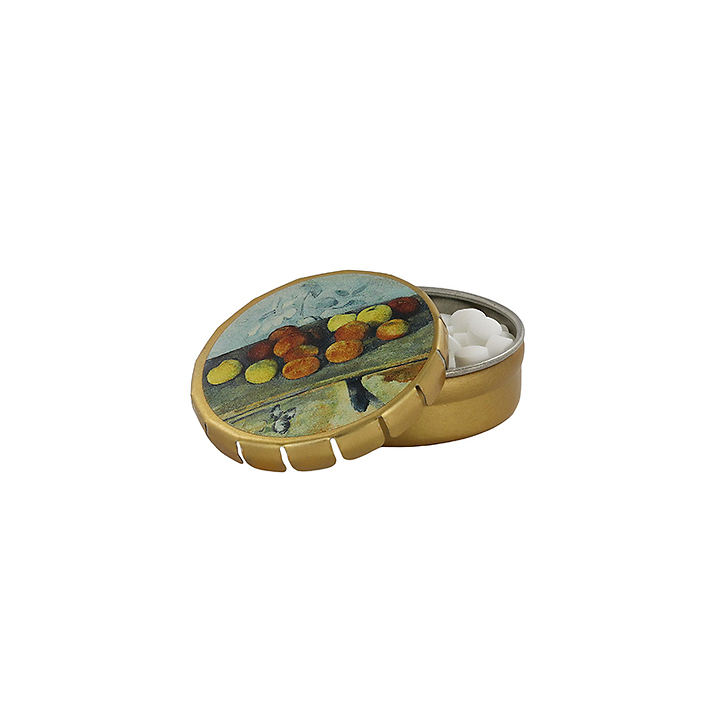
This box of mint pastilles depicts Paul Cezanne's (1839-1906) work Apples and Biscuits, 1880, housed at the Musée de l'Orangerie in Paris.
Paul Cezanne (1839-1906)
Apples and Biscuits, 1880
Oil on canvas. H. 45; W. 55 cm with frame H. 79; W. 87.5; D. 14.5 cm
© GrandPalaisRmn (Musée de l'Orangerie...
Read more
This box of mint pastilles depicts Paul Cezanne's (1839-1906) work Apples and Biscuits, 1880, housed at the Musée de l'Orangerie in Paris.
Paul Cezanne (1839-1906)
Apples and Biscuits, 1880
Oil on canvas. H. 45; W. 55 cm with frame H. 79; W. 87.5; D. 14.5 cm
© GrandPalaisRmn (Musée de l'Orangerie)
This painting is one of Paul Cézanne's most striking masterpieces and one of the symbols of his great mastery of still life. It was acquired at a high price in 1952 by Domenica Walter. This sensational purchase drew attention to it and revealed the existence of her magnificent collection to the general public.
Here, Cézanne creates a very balanced composition using only a plate and a few apples arranged on a chest.
Close
Sold by GrandPalaisRmn