Gertrude is Gertrude is Gertrude is Gertrude
JA105928
French version
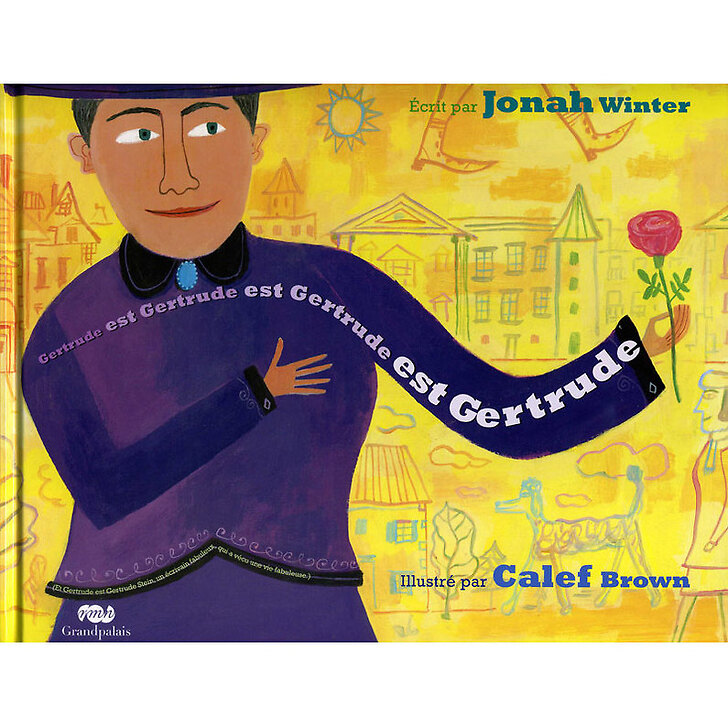
At the beginning of the 20th century, Gertrude Stein was "an American in Paris". She ran a salon frequented by the entire artistic and literary avant-garde of the time.
By day, she collected works by Matisse, Cézanne, Picasso... By night, she wrote in a style as modern and innovative...
Read more
French version
At the beginning of the 20th century, Gertrude Stein was "an American in Paris". She ran a salon frequented by the entire artistic and literary avant-garde of the time.
By day, she collected works by Matisse, Cézanne, Picasso... By night, she wrote in a style as modern and innovative as that of her painter friends.
The text, which describes her life, is inspired by her rhythmic, repetitive writing style, which plays on the absurd, as in "Une rose est une rose, est une rose, est une rose", the poem that made her famous.
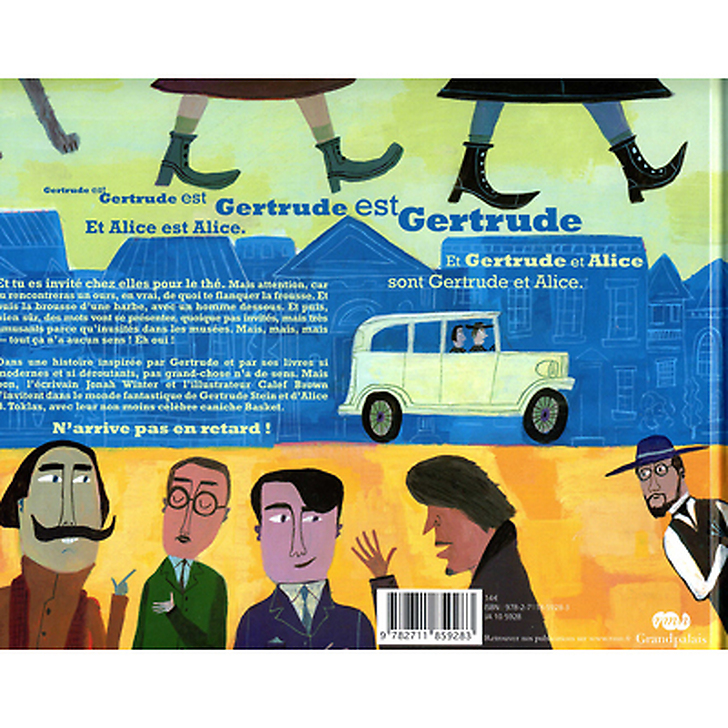
The illustrations, in broad, brightly-colored flat tints, were also inspired by the modern art of the time, the work of Matisse and Picasso, who "looks angry, but NOT. He just invented modern art, which is different from being angry - or maybe not [...] it's so hard to invent modern art."
We also see Ernest Hemingway, and especially his great friend Alice B. Toklas: "Gertrude keeps her guests entertained and laughing. And Alice makes sure Gertrude is happy."
Close
Sold by GrandPalaisRmn