Claude Monet's Poppies series: analysis and legacy
A line of accessories...
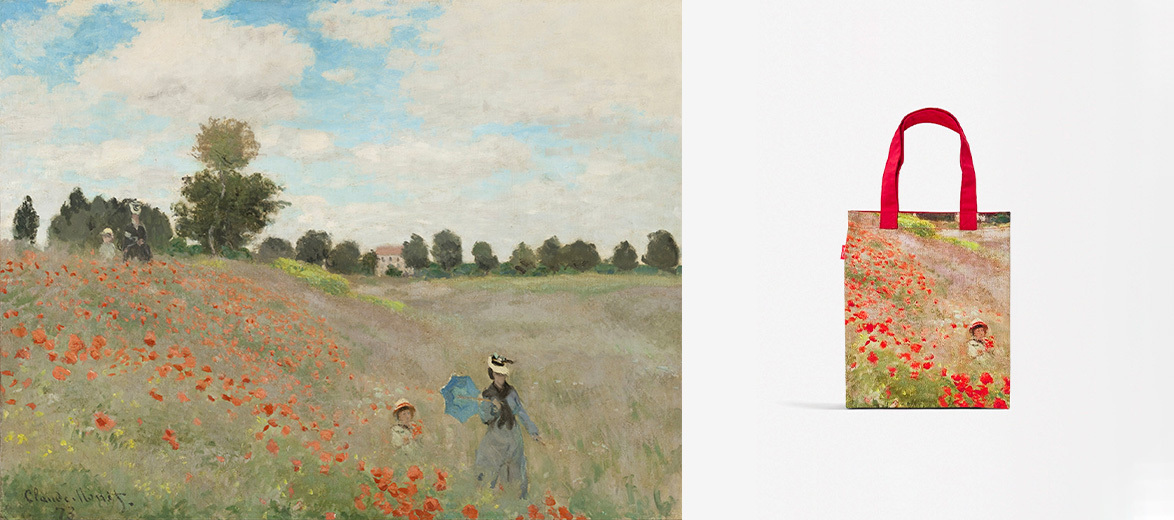
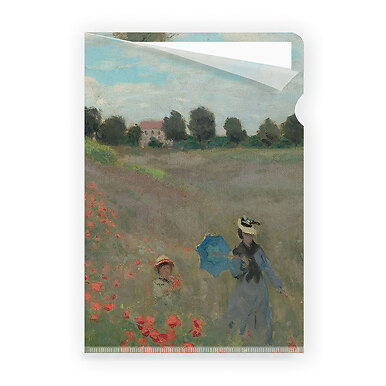
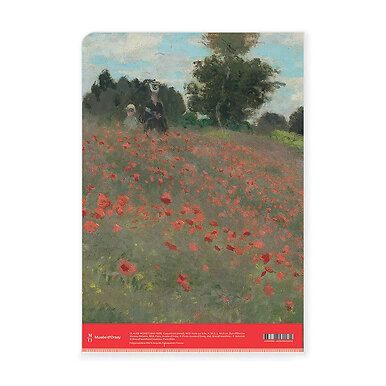
Discover our line of refined accessories, where each piece is inspired by the brilliance and poetry of the red poppies immortalised by Claude Monet.
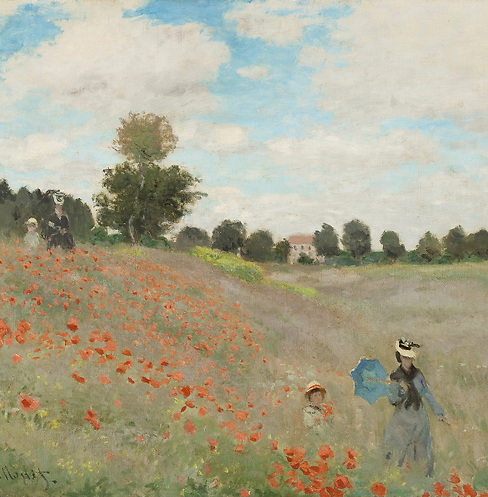
Monet's chromatic innovation was based on applying pure colours directly to the canvas without mixing them on the palette first. The bright red of the poppies contrasts with the soft green of the grass, in accordance with the principles of complementary colours studied by French scientist Michel-Eugène Chevreul.
This Impressionist technique favours small, rapid, visible brushstrokes that create an optical vibration effect characteristic of the movement.
The technical revolution was accompanied by the use of tin tubes, invented in 1850, which allowed colours to be transported for outdoor painting. This material approach radically transformed the traditional artistic practice of the ate
" Colour is my daily obsession, my joy and my torment. "
Claude Monet
...And a line of stationery
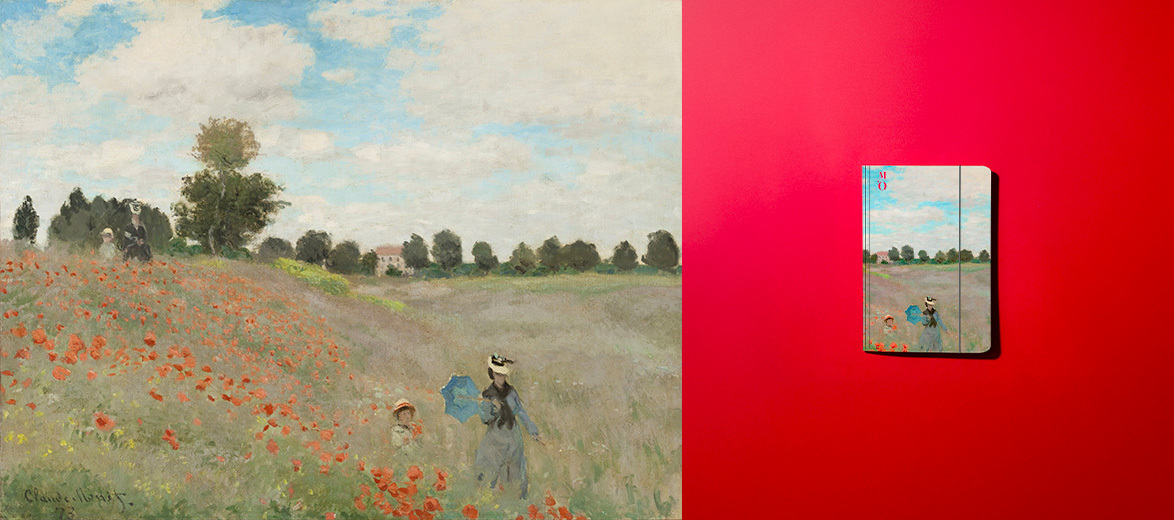
Inspired by the magic of Monet's "Les Coquelicots", our stationery collection captures the light, colours and movement of fields in bloom. Each notebook, diary or card invites you to feel the poetry of the wind in the poppies and give free rein to your creativity, as if your ideas were dancing across the page.
L'été de 1873 à Argenteuil offre à Monet les conditions idéales pour ses recherches sur les effets lumineux. Cette saison privilégiée transforme le paysage en laboratoire chromatique, où chaque variation atmosphérique génère de nouveaux rapports colorés. Monet saisit ces nuances fugaces par une observation minutieuse, captant l'atmosphère vibrante de cette journée estivale.
Cette vision du paysage marque une rupture fondamentale avec les conventions académiques du genre. Monet abandonne la hiérarchie traditionnelle qui subordonnait la nature aux figures humaines pour privilégier l'impression visuelle pure. Les contours dilués et la rythmique colorée construite par l'évocation des coquelicots témoignent d'une approche où la sensation prime sur la description.
Les taches de couleur aux formats démesurés au premier plan révèlent cette primauté accordée à l'expérience sensorielledu spectateur, transformant chaque variation atmosphérique en événement pictural autonome.
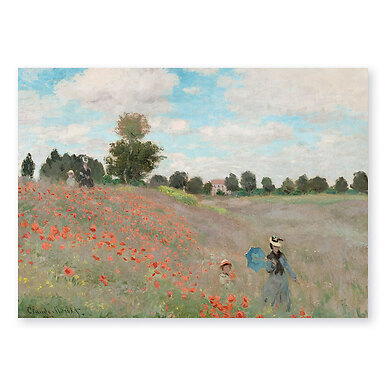
Did you know ?
Monet sometimes asked his wife Camille and his son Jean to stand still in the field as models, but the wind always moved the flowers and clothes, forcing him to improvise and capture the natural movement in his painting.