The Water Lily Pond, green harmony by Claude Monet: analysis and history
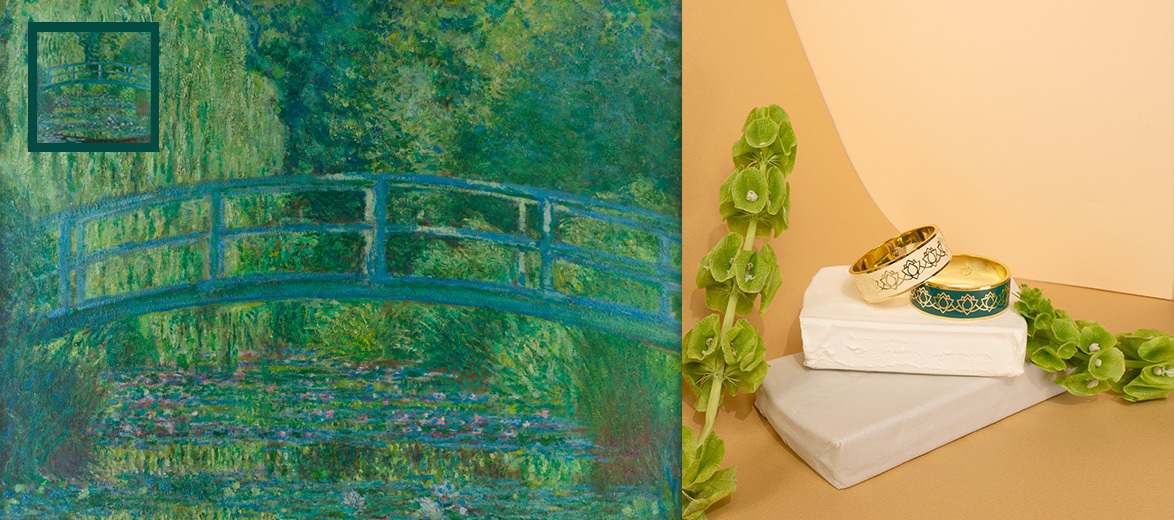
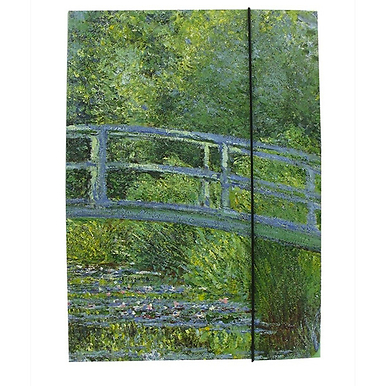
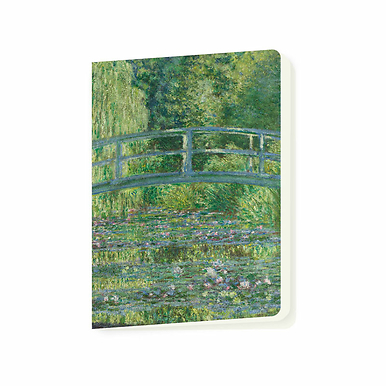
A line of accessories...
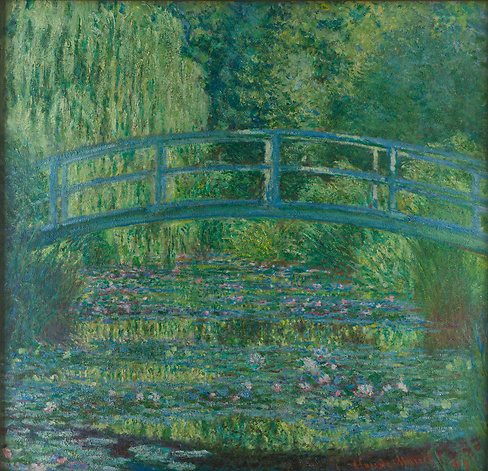
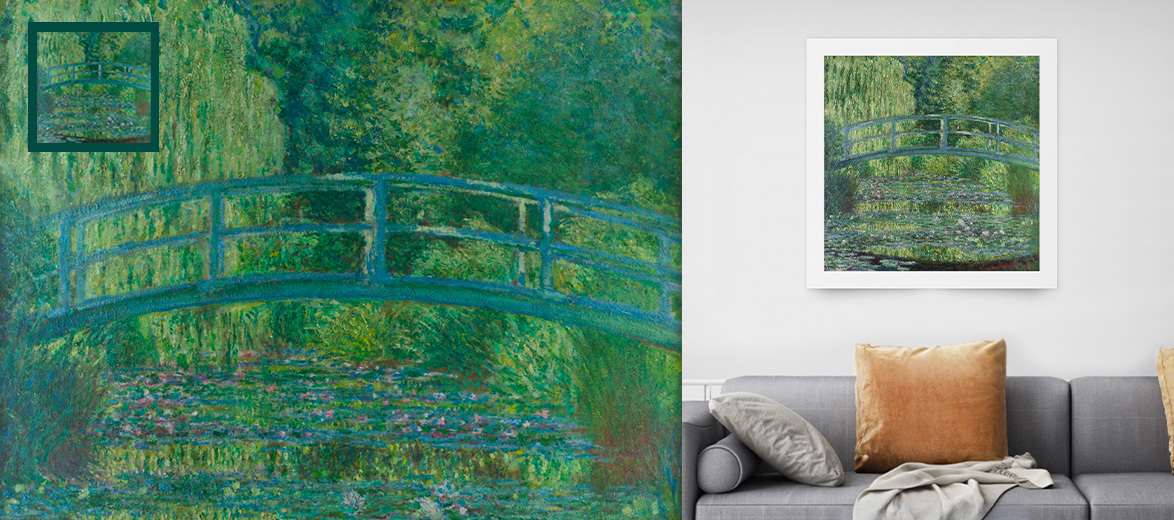
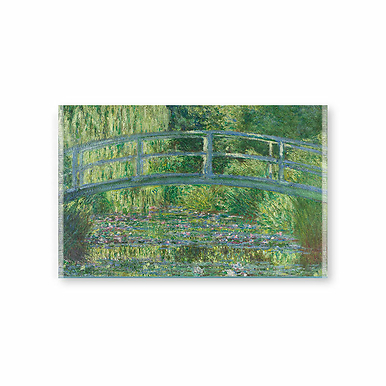
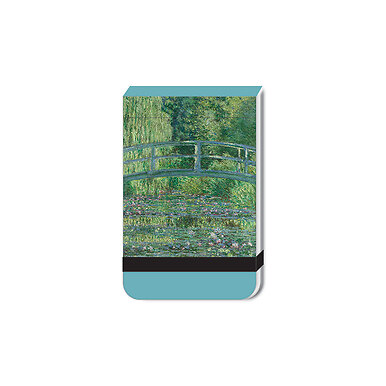
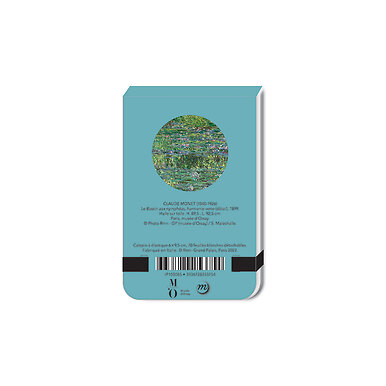
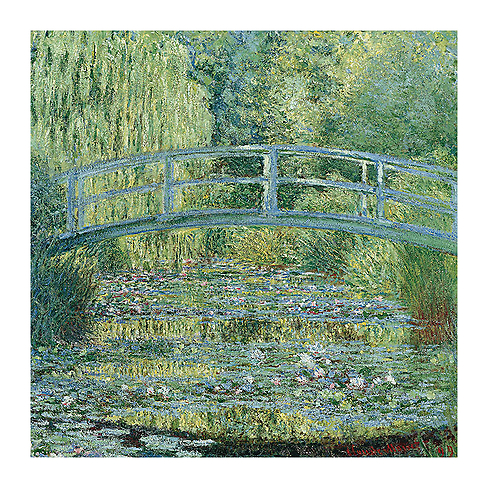
This iconic work depicts the Japanese bridge spanning the water lily pond in his water garden at Giverny, a motif that the Impressionist master painted in twelve versions during this period. The composition favors a chromatic harmony dominated by greens and bluish greens, revealing Monet's revolutionary technique of capturing natural light rather than faithfully reproducing reality.
This canvas bears witness to the painter's artistic achievement at his Normandy estate, where he transformed his personal environment into a creative laboratory for the nascent Impressionist movement.
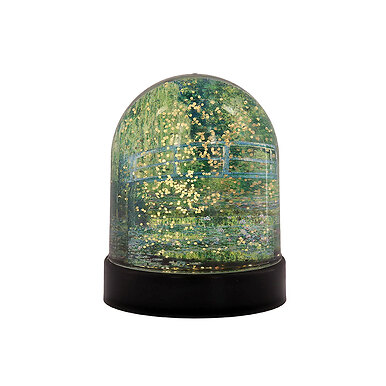

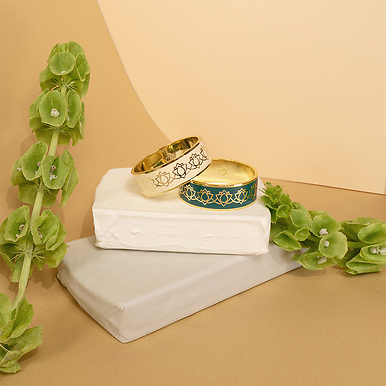
" I want to paint the air in which the bridge, the house, and the boat are located. The beauty of the air in which they exist, and that is nothing less than the impossible. "
Claude Monet
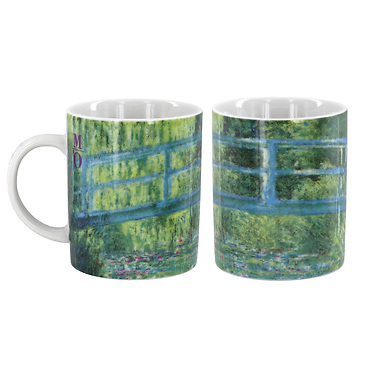
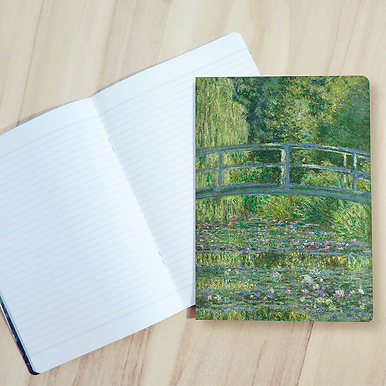
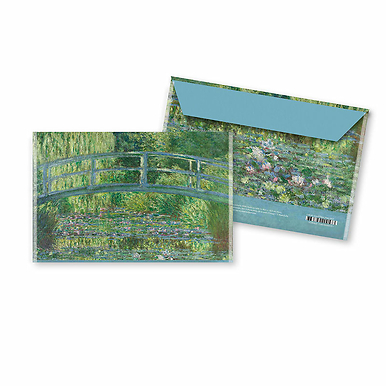
...And a line of stationery
The color palette and pink-green harmony
Shades of green dominate this composition with a bluish-green monochrome that extends from the aquatic plants to the reeds, bamboo, and irises on the banks. Monet orchestrates a chromatic symphony in which emerald green tones interact with subtle touches of pink, creating the harmony so characteristic of his Giverny period.
This color palette reveals the painter's mastery of the art of optical color mixing. The green reflections of the water blend with the pink shades of the water lilies, while the soft greens of the surrounding vegetation unify the whole in a contemplative serenity.
Did you know ?
The acquisition of this painting by the national collections is part of a remarkable heritage initiative. The art dealer Paul Durand-Ruel bought the work directly from Monet on November 21, 1900, before selling it the very next day to Count Isaac de Camondo.
Why did Claude Monet paint Water Lily Pond, Green Harmony?
The water garden he began creating in 1893 gradually became his favorite laboratory for visual experimentation.
This 1899 painting reflects his fascination with the play of light on water surfaces and the changing reflections of the sky in the water. Monet sought to capture the elusive: the subtle atmospheric variations that constantly transformed the appearance of his pond.
The Japanese wooden bridge, the central motif of the work, structures this aesthetic quest while providing an ideal vantage point from which to study the chromatic metamorphoses of his private aquatic universe.