Bal du Moulin de la Galette 1876 Lign: analysis of Renoir's masterpiece
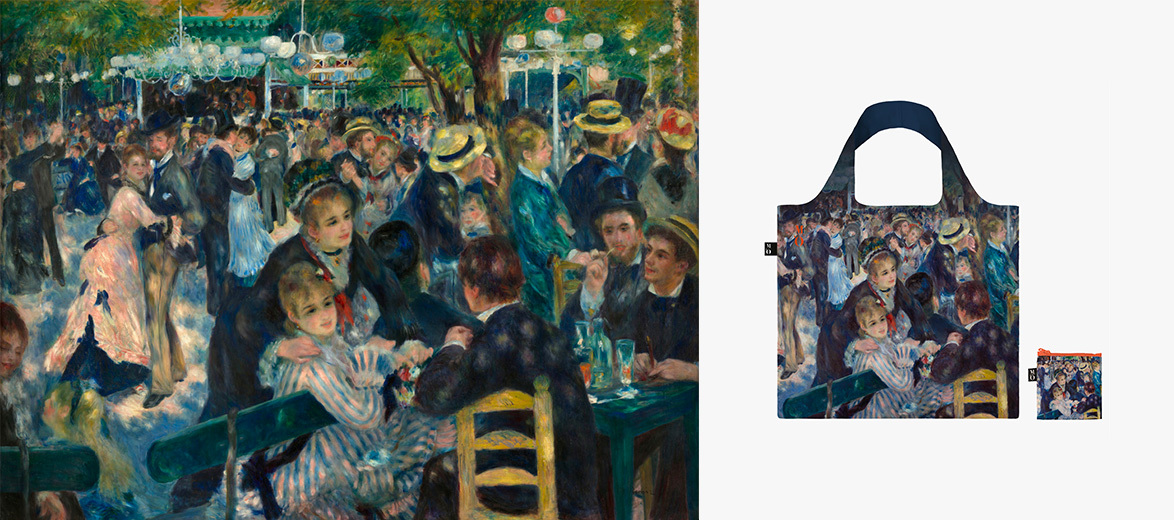
A line of accessories...
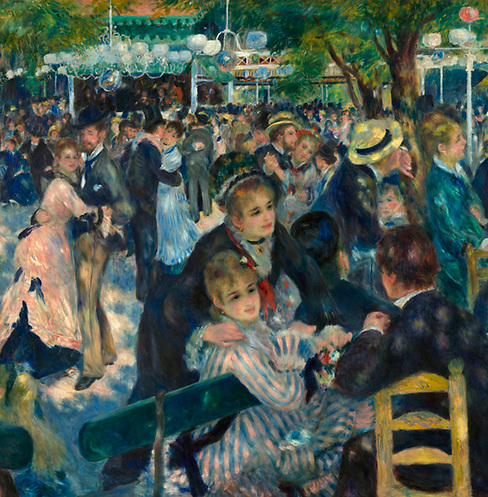
The Bal du Moulin de la Galette marked a turning point in Renoir's career. This painting paved the way for a whole series of outdoor leisure scenes that would become his signature: boaters on the banks of the Seine at Chatou, sunny lunches on river terraces, walkers under the trees. The artist refined his ability to capture collective movement and vibrant light, two obsessions he would pursue until the end of his life.
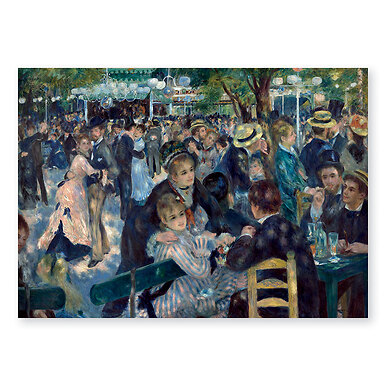
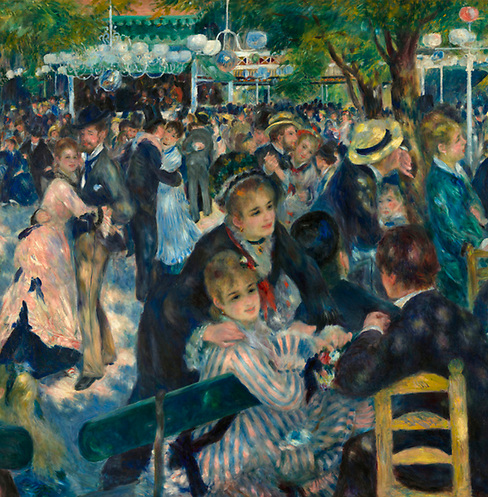
Renoir's genius in Le Bal du Moulin de la Galette lies in his ability to orchestrate a bustling scene while maintaining perfect harmony. Renoir constructs his painting on a diagonal line that crosses the canvas from one side to the other, clearly separating the background, where dancers whirl around, from the foreground, where groups of drinkers sit quietly conversing at tables. This geometric organization avoids any sense of chaos and creates a natural depth that guides the viewer's gaze.
Even today, this painting embodies the very essence of Parisian Impressionism: the celebration of everyday life transfigured by light.
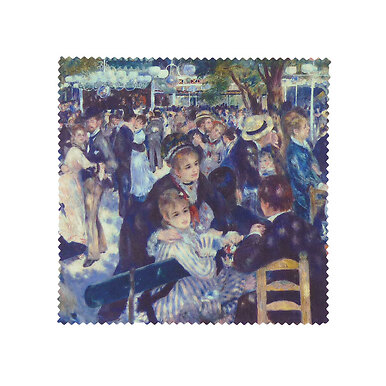

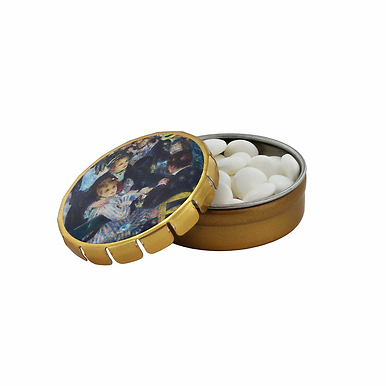
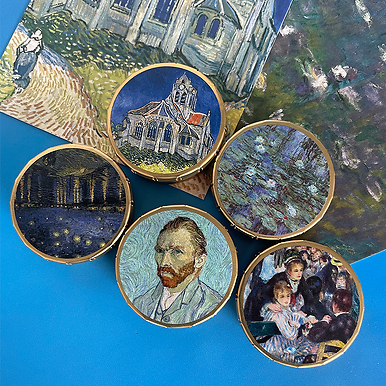
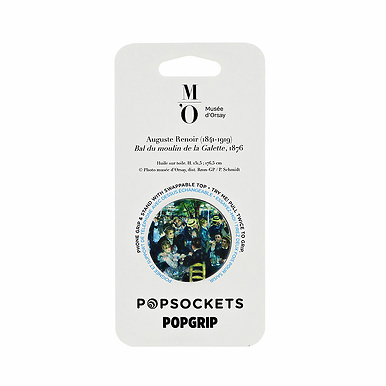

" For me, a painting should be something pleasant, joyful, and pretty—yes, pretty. "
Pierre-Auguste Renoir
...And a line of stationary
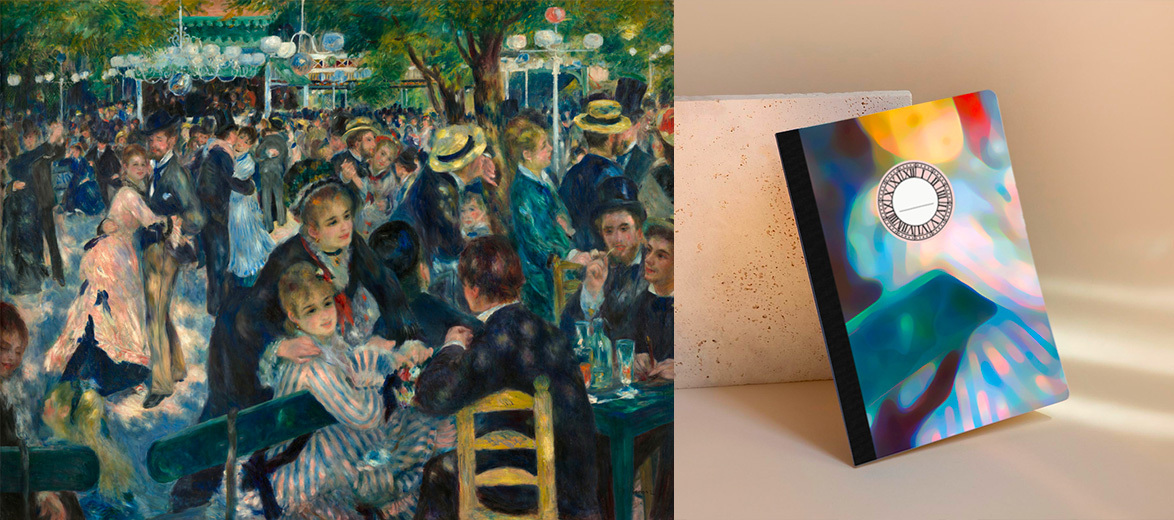
To paint Bal du Moulin de la Galette, Renoir set up his easel in the garden of his studio on Rue Cortot, just a few steps from the guinguette. This proximity allowed him to transport the large canvas between work sessions. Like other Impressionists, he adopted the plein air method to capture natural light and its variations. The recent invention of paint tubes facilitated this practice: Renoir could now compose his palette on site, under the filtered light of the foliage, and capture the atmosphere of the moment.
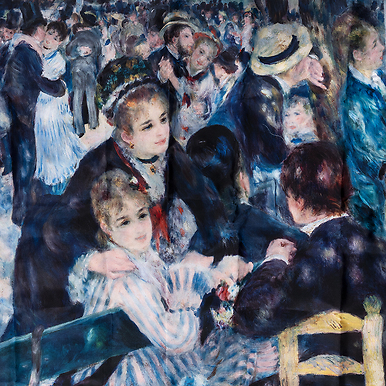
The style of this work is based on rapid brushstrokes, applied in small juxtaposed commas of color. Rather than mixing pigments at length, he applied visible impasto strokes that created an optical vibration. This Impressionist technique conveyed the movement of the dancers and the fleeting brilliance of the summer light. Renoir painted directly in blocks of color, without preparatory sketches, giving the work a joyful spontaneity and the feeling of a moment captured on the spot.


Did you know ?
The Moulin de la Galette, transformed into a guinguette by the Debray family in 1834, became the place to be on Sunday afternoons. From 3 p.m. onwards, workers, seamstresses, and artists would gather there to dance until nightfall. The friendly atmosphere appealed to Renoir, who set up his easel there to capture this simple joy.
Was Auguste Renoir's Bal du Moulin de la Galette really painted in 1876?
Yes, absolutely. The archives of the Musée d'Orsay and contemporary accounts confirm that this painting was produced in 1876, when Renoir moved to Rue Cortot to work outdoors. The work was exhibited in 1877 at the third Impressionist exhibition, confirming its precise date.
Why did Auguste Renoir paint this scene of a guinguette?
Renoir sought to capture the simple pleasures of Parisian Sundays and the modern spirit of his era. He wanted to immortalize this good-natured atmosphere where workers and artists mingled to dance and share galettes. For him, this scene of popular life embodied the spontaneous joy and vibrant light that defined the Impressionist aesthetic.
What is Renoir's most famous painting?
Le Bal du Moulin de la Galette is one of Renoir's most iconic works, alongside Déjeuner des canotiers and Jeunes filles au piano. This painting remains one of the most reproduced and admired, symbolizing French Impressionism and the artist's luminous vision.
What is the history of the Moulin de la Galette?
In 1812, miller Nicolas-Charles Debray, owner of the Moulin Blute-Fin, bought the Moulin Radet. The Blute-Fin supplied Paris with flour, while the Radet crushed grains for perfumery. A visionary, Debray combined the two mills by moving the Radet mill closer to the Blute-Fin mill and opening a guinguette, or open-air café, which would make this legendary place famous.
The establishment became a restaurant in the 1980s, transforming from a popular guinguette to a restaurant frequented by celebrities.