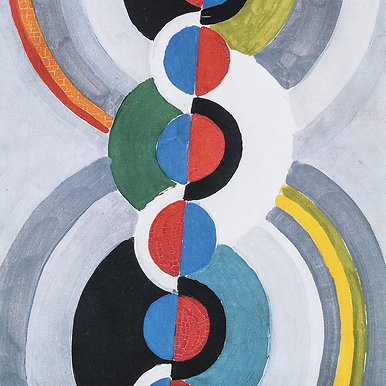
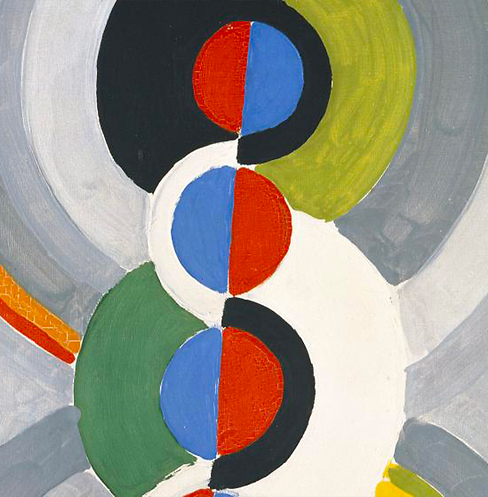
Robert Delaunay - Rythm, 1934
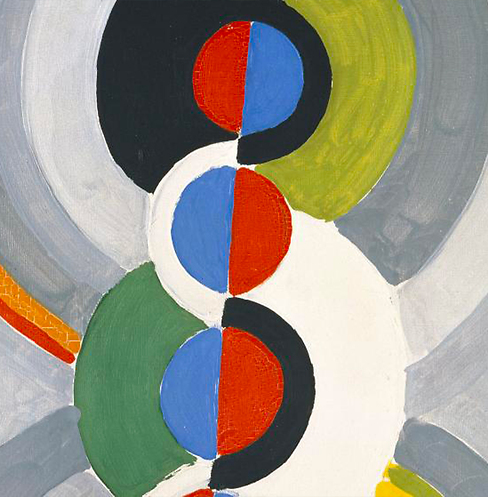
Experience the vibrant energy of this artwork through our selection of exclusive merchandise, ranging from fashion accessories to home décor items inspired by Robert Delaunay's colourful rhythms.
A lign of accessories...
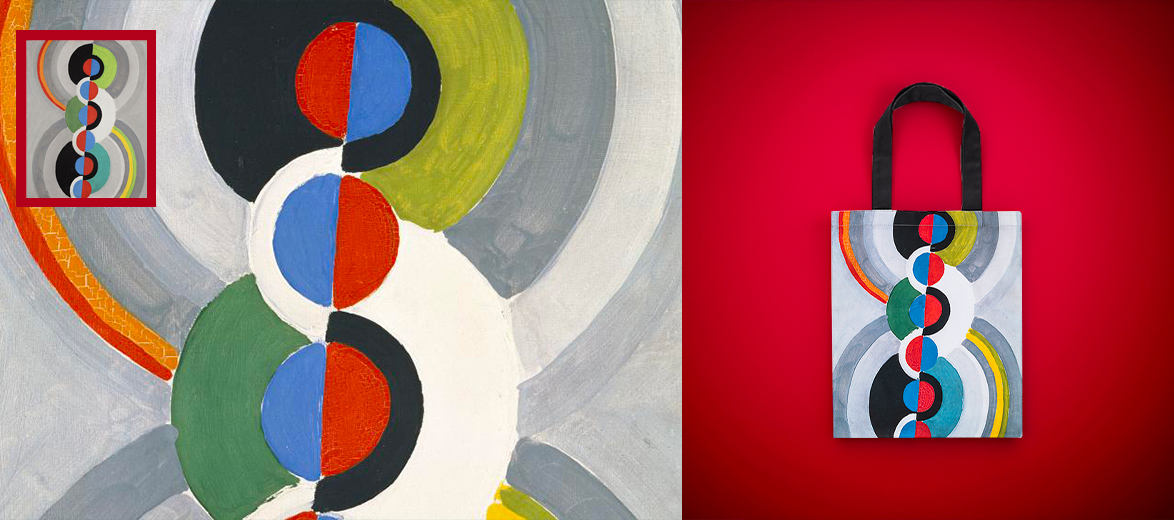
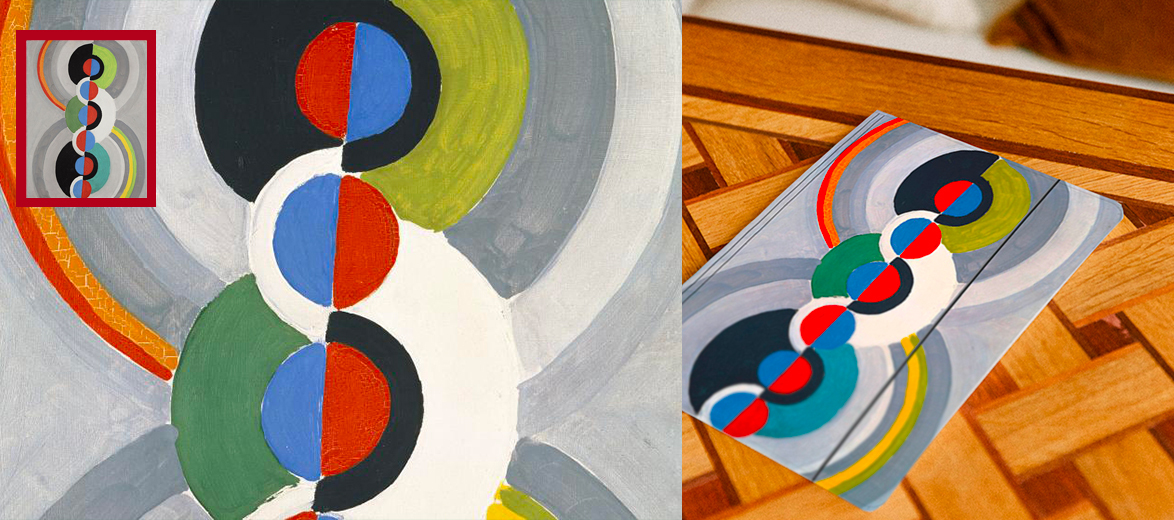
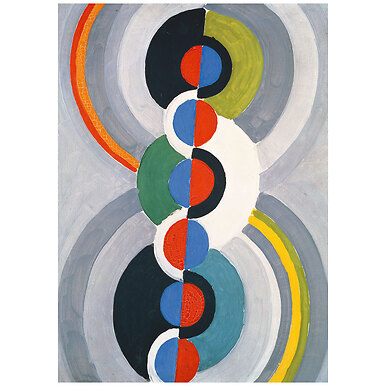
This oil on canvas, measuring 200 x 228 cm, features a sophisticated arrangement of semi-circular shapes in vivid colours. The pictorial space is divided along a diagonal, ascending axis that runs straight through the composition.
The blocks of colour are arranged in rhythmic sequences, creating a striking visual dynamism. Each chromatic segment interacts with its neighbours through a play of complementary colours: red against green, blue facing orange.
This eponymous series of paintings bears witness to Delaunay's artistic maturity in the 1930s. The work creates a sensation of perpetual motion, as if the circular forms were linked together endlessly across the surface of the canvas.
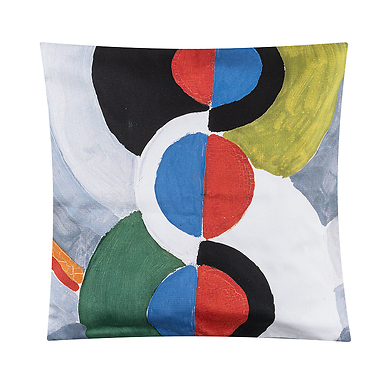
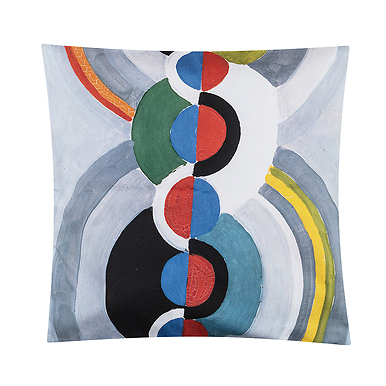
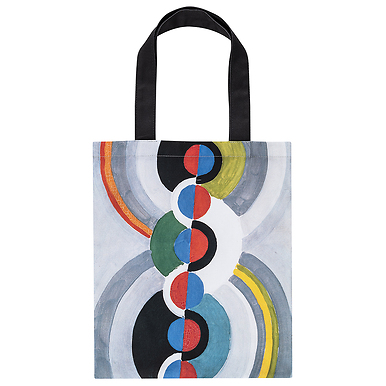
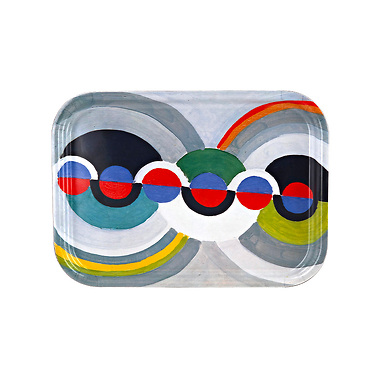
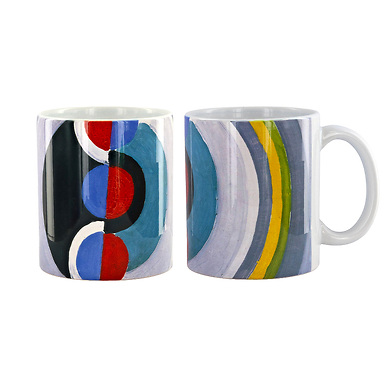
...And a lign of stationary
Les recherches chromatiques de Delaunay s'appuient sur les travaux du chimiste Michel-Eugène Chevreul et sa loi du contraste simultané des couleurs. Cette base scientifique transforme l'approche intuitive en système plastique rigoureux, où chaque teinte génère des vibrations optiques spécifiques.
Le simultanéisme, terme que préfère l'artiste à celui d'orphisme, exploite les phénomènes de persistance rétinienne pour créer des sensations de mouvement. Les couleurs pures juxtaposées produisent ces effets dynamiques sans recours au mélange traditionnel sur palette.
Cette théorisation révolutionnaire place la couleur comme sujet unique de l'œuvre, abandonnant toute référence figurative. Les contrastes complémentaires deviennent les véritables constructeurs de l'espace pictural, chaque nuance possédant sa propre durée vibratoire selon les analogies sonores chères à Delaunay.




Did you know ?
When he was just four years old, his parents took him to visit the 1889 Paris World’s Fair. It was during this event that he first laid eyes on the Eiffel Tower, which had only just been completed. This monumental visual impact would become a lifelong obsession: the artist would depict it from every angle in his famous series of paintings, seeing it as the ultimate symbol of a break with the past.
What do Robert Delaunay's paintings generally consist of?
Robert Delaunay's paintings are generally composed of circular geometric shapes, such as discs and concentric rings, which structure the space without resorting to traditional figuration. These compositions rely on the juxtaposition of pure, contrasting colours to create a dynamic visual rhythm and convey the vibrations of light according to the law of simultaneous contrast.
Where are Robert Delaunay's works exhibited?
Robert Delaunay's works are held in prestigious international institutions, notably the Centre Pompidou in Paris, which houses the world's most extensive collection, as well as the Musée d'Art Moderne de Paris and the Musée des Beaux-Arts de Lyon. Abroad, his major works are exhibited in iconic venues such as the Solomon R. Guggenheim Museum and MoMA in New York, and the Tate Modern in London.