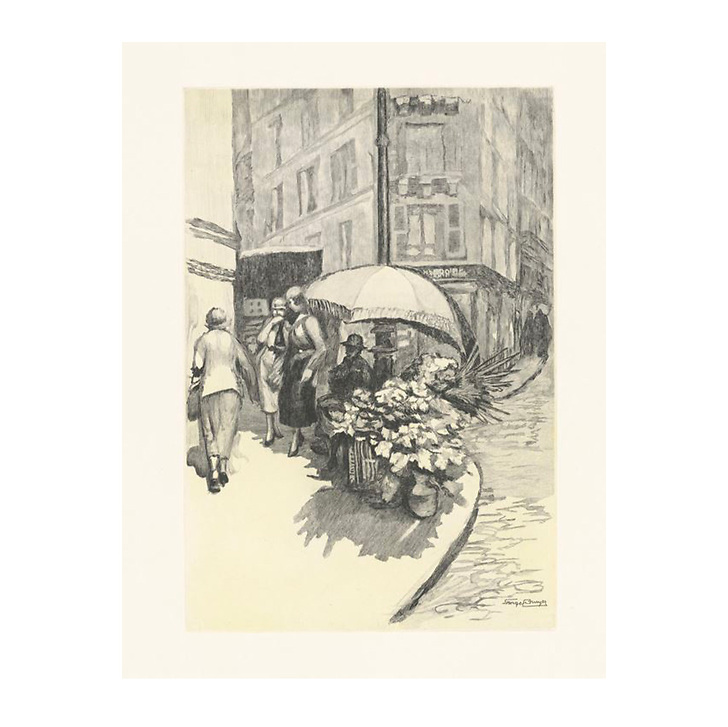
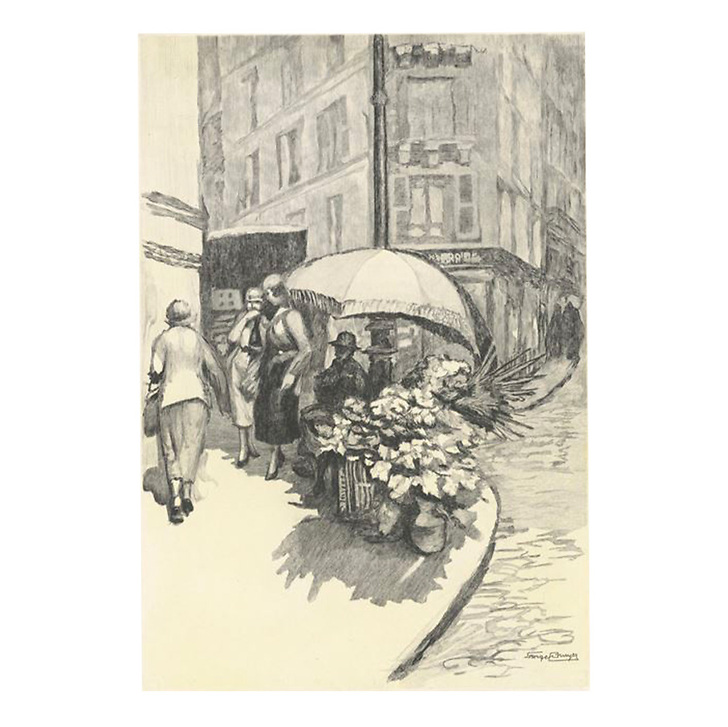
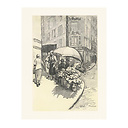
Engraving Flower Seller in Montmartre
KM010649
Georges Bruyer was a Parisian painter, engraver, ceramist, and illustrator. He quickly turned to engraving, a medium that became his true form of expression. Over time, his style evolved toward a marked realism, in which he sketched the people of Paris, particularly the city's workers. After World War...
Read more
Georges Bruyer was a Parisian painter, engraver, ceramist, and illustrator. He quickly turned to engraving, a medium that became his true form of expression. Over time, his style evolved toward a marked realism, in which he sketched the people of Paris, particularly the city's workers. After World War I, Bruyer's reputation grew and he received numerous official commissions from the state, museums, and various institutions. Among his major works are Le Chantier du Trocadéro, commissioned for the 1937 World's Fair, and La Rue Mouffetard, commissioned by the City of Paris.
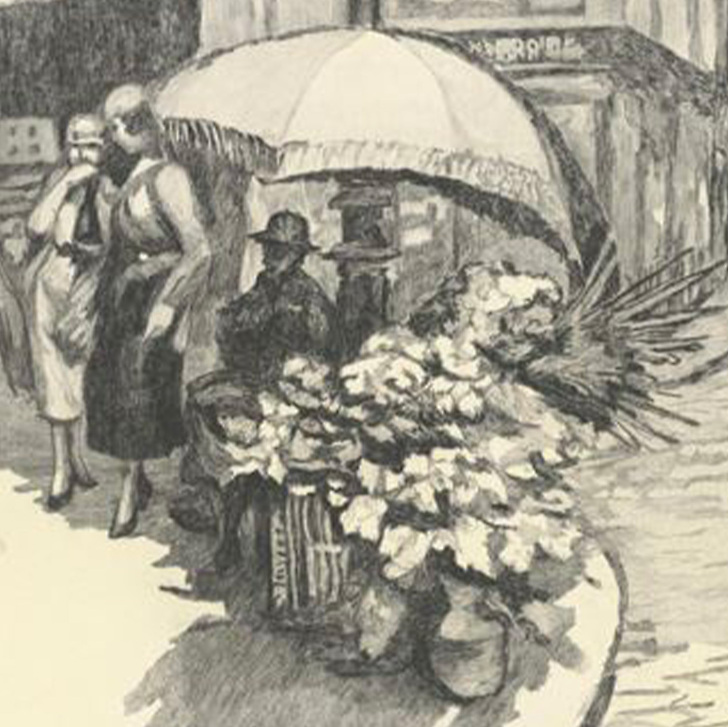
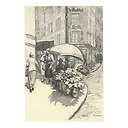
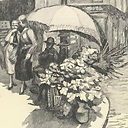
The engraving Marchande de fleurs à Montmartre (Flower Seller in Montmartre) was commissioned in 1941 by the Fonds national d'art contemporain (FNAC) and deposited at the Chalcographie du Louvre the following year. This work depicts a typical scene from Montmartre at the time, when the tradition of selling flowers in the streets was still alive and well. Through this composition, Bruyer returned to his early inspirations, which led him to immortalize the popular trades of the capital. Alongside his career as an artist, Georges Bruyer played a key role in the field of engraving, notably as technical manager of the Chalcography department at the Louvre Museum, responsible for reproducing the prints sold at the museum.
Close
Sold by GrandPalaisRmn