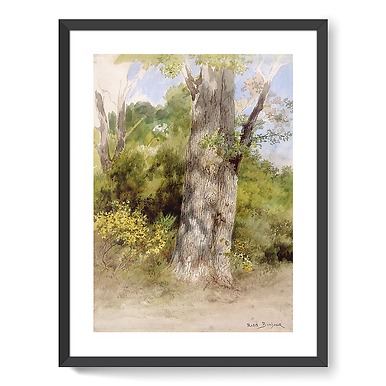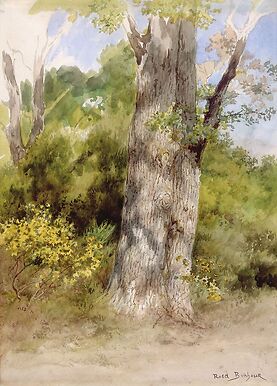
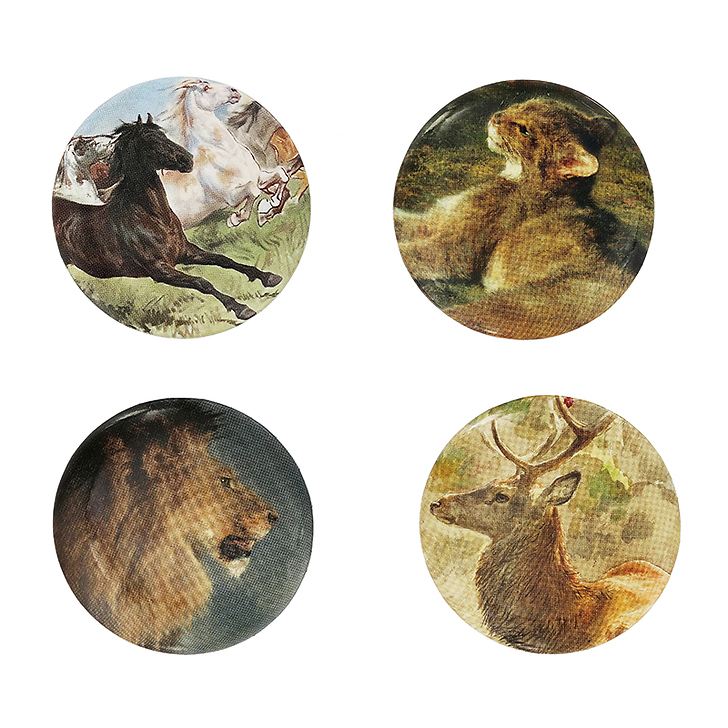

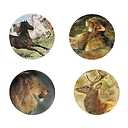
Rosa Bonheur Lion Head Badge

CU500427

This badge was issued for the "Rosa Bonheur (1822-1899)" exhibition at the Musée d'Orsay from 18 October 2022 to 15 January 2023.

Rosa Bonheur (1822 - 1899)
A Lion's head (details), 1870-1891
Oil on canvas. H. 80,5 ; l. 64,2 cm
United Kingdom, The Royal Collection Trust, 1879
© Photo Royal Collection...

-{{ Math.floor(lowestprice.prices.user.percent) }}%
-{{ Math.floor(selectedVariant.prices.user.percent) }}%
From Current price{{ lowestprice.prices.user.price_tax_display }} Old price{{ lowestprice.prices.user.price_strike_tax_display }} Current price{{ lowestprice.prices.user.label }}
{{ price.price_tax_display }} {{ price.label }}
Public price Current price{{ lowestprice.prices.suggested.price_tax_display }} Old price{{ lowestprice.prices.suggested.price_strike_tax_display }}
excl. taxes
Current price{{ selectedVariant.prices.user.price_tax_display }} Old price{{ selectedVariant.prices.user.price_strike_tax_display }} Current price{{ selectedVariant.prices.user.label }}
{{ price.price_tax_display }} {{ price.label }}
Public price Current price{{ selectedVariant.prices.suggested.price_tax_display }} Old price{{ selectedVariant.prices.suggested.price_strike_tax_display }}
excl. taxes
Last available items

Rosa Bonheur Lion Head Badge

Item unavailable
Sold by GrandPalaisRmn

Characteristics

Museum
Musée d'Orsay
Themes
Animals, Made in France
Artist
Rosa Bonheur (dit), Bonheur Marie Rosalie (1822-1899)
Art movements
19th century, Realism
Reference
CU500427
EAN
3336729214549
Matière de l'article
Paper, metal
Model dimensions
3.8cm
Conservation museums
Paris - Musée d'Orsay, Londres - The Royal Collection Trust

Our selection

Pin's

The work and its artist

Rosa Bonheur (dit), Bonheur Marie Rosalie (1822-1899)

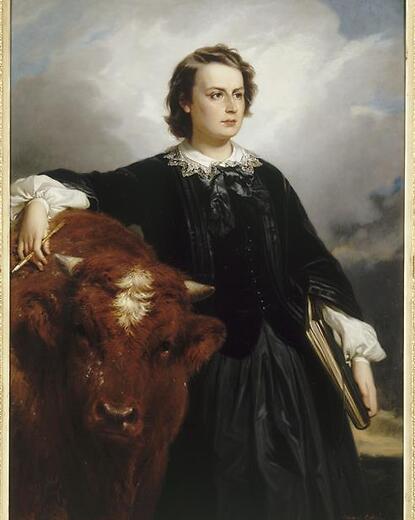
Marie-Rosalie Bonheur, known as Rosa Bonheur, born on March 16, 1822 in Bordeaux and died on May 25, 1899 in Thomery, was a French painter and sculptor, specializing in genre scenes with animals, animal painting and sculpture. The fame she enjoyed during her lifetime quickly faded after her death; her painting was too far from modern trends. From 1980 onwards, biographical publications associated her with the beginnings of feminism because of the very emancipated life she led.