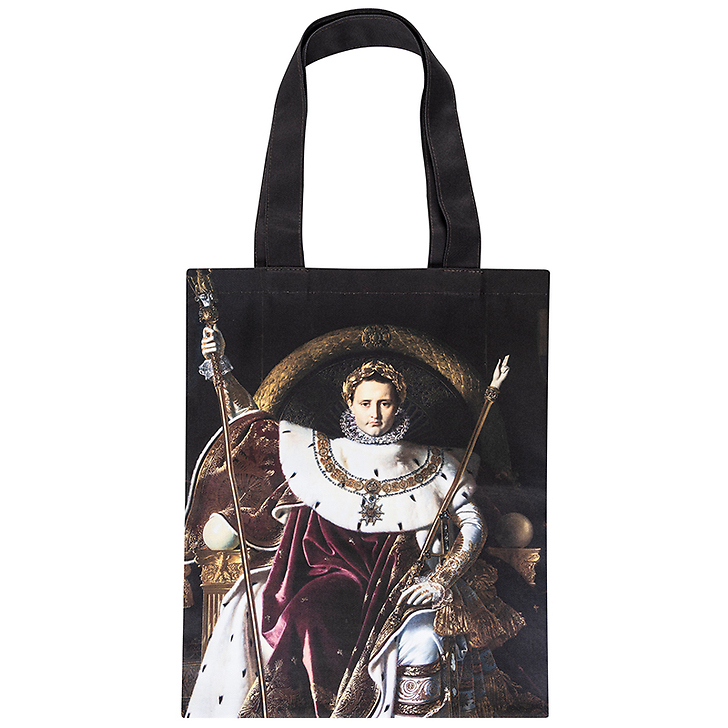
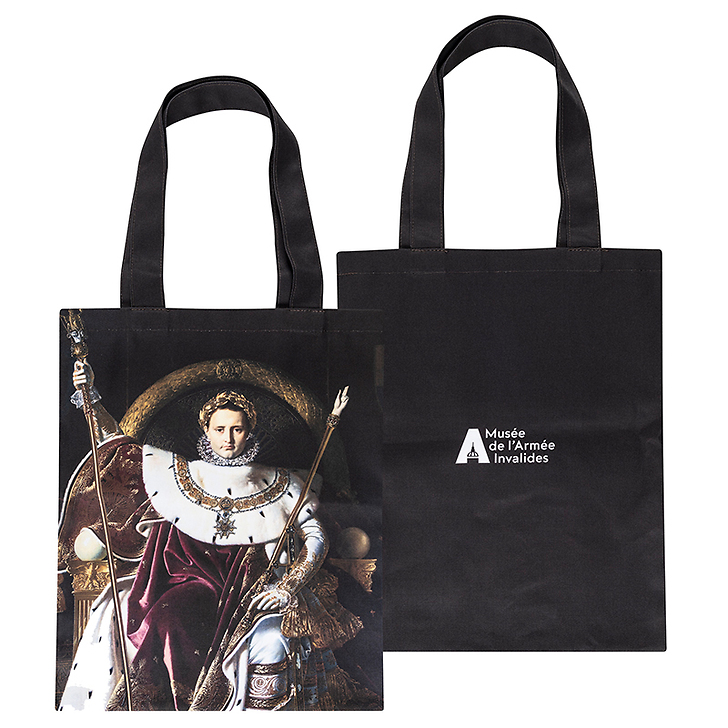
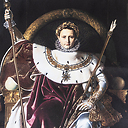
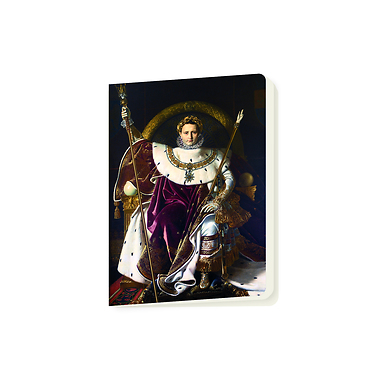
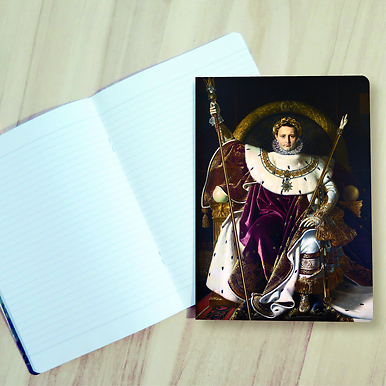
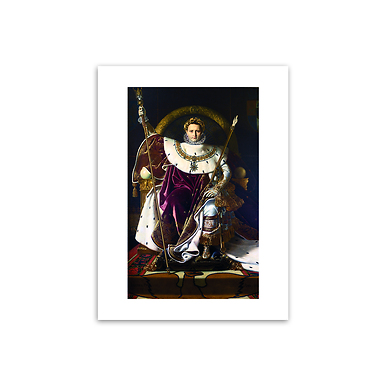
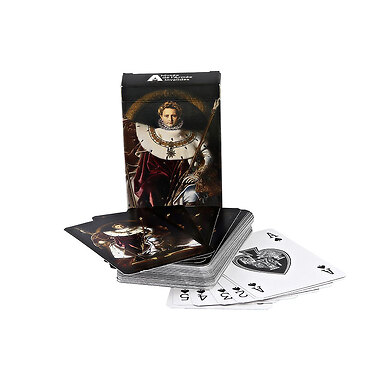
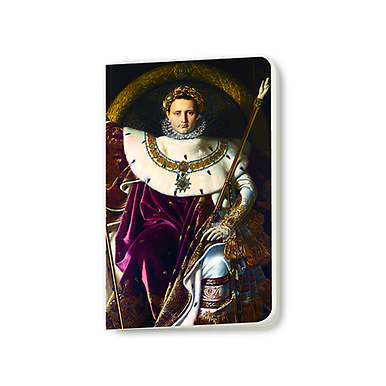
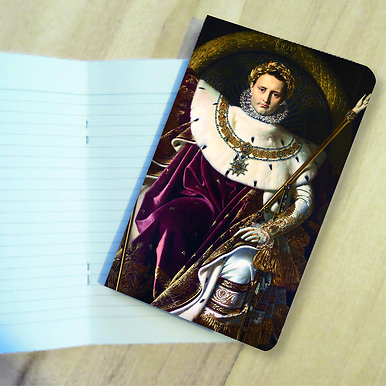
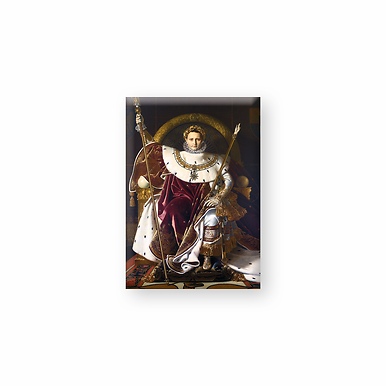
This bag is based on Jean-Auguste-Dominique Ingres' work "Napoléon Ier sur le trône impérial" or "His Majesty the Emperor of the French on his throne".
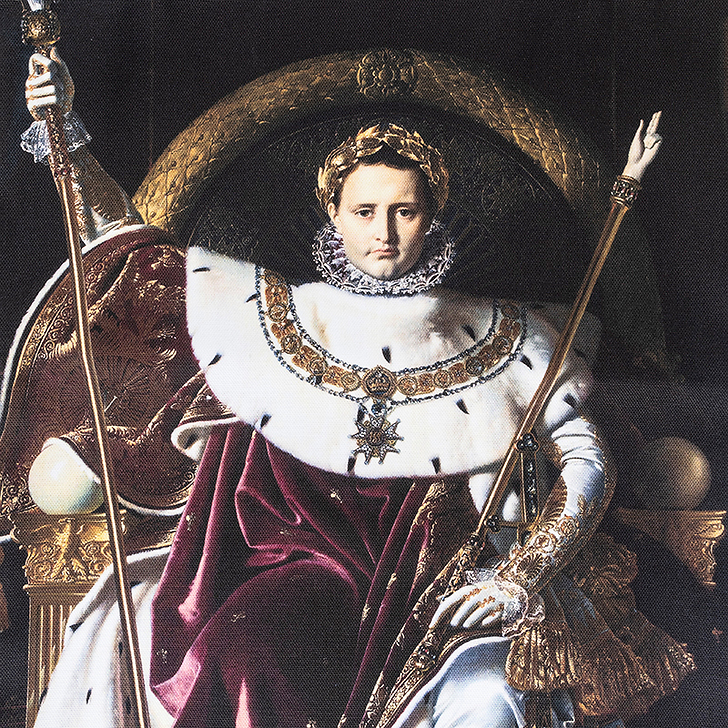
In this portrait of Napoleon I in his coronation robes, Ingres depicts some of the attributes and symbols of imperial power. Now used to illustrate millions of history textbooks, this work, which was deemed shocking in 1806, waited almost a century before being exhibited.
Jean-Auguste-Dominique Ingres (1780-1867)
'Napoleon I on the Imperial Throne' or "His Majesty the Emperor of the French on his Throne", 1806
Oil on canvas W. 1.63 m, H. 2.60 m.
© Paris - Musée de l'Armée, Dist. RMN-Grand Palais / Emilie Cambier
To learn more about the work
What is the imperial coronation?
The imperial coronation is a sacred ceremony that legitimises Napoleon Bonaparte's reign as Emperor of the French. This lavish celebration took place on 2 December 1804 at Notre-Dame Cathedral in Paris, in the presence of Pope Pius VII. Napoleon chose to crown himself and Empress Josephine, reducing the pope to a mere witness to this affirmation of imperial power.
What does Napoleon I symbolise on his imperial throne?
This painting symbolises the legitimisation of Napoleon's absolute power as Emperor of the French. Ingres depicts the Emperor as a divine and sacred figure, inspired by Byzantine icons and ancient Roman emperors. This official image, established by senatus consultum, links the new dynasty to the kings of France and the Carolingian heritage.
The portrait brings together all the attributes of imperial power:
What is the context in which the portrait was created?
Commissioned by the imperial administration in 1806, this official portrait was acquired by the Legislative Body. Ingres, then a young artist and painter aged 26, completed his second official commission. According to some historians, the painting was initially intended for an Italian institution to represent Napoleon as King of Italy. Presented at the Salon of 1806, the painting was met with incomprehension by the public, who deemed it 'Gothic' and 'barbaric'. Ingres' innovative approach, combining medieval and ancient references, confused his contemporaries, who were accustomed to a more sober neoclassicism.