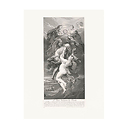
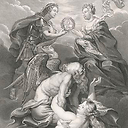
Engraving The Triumph of Truth
KM000831
Queen of France, wife of Henry IV, and mother of King Louis XIII, Marie de' Medici commissioned a series of twenty-four paintings from Peter Paul Rubens in 1622 to decorate the western gallery of the Luxembourg Palace. The major episodes of the Queen's life are depicted here in a heroic and allegorical...
Read more
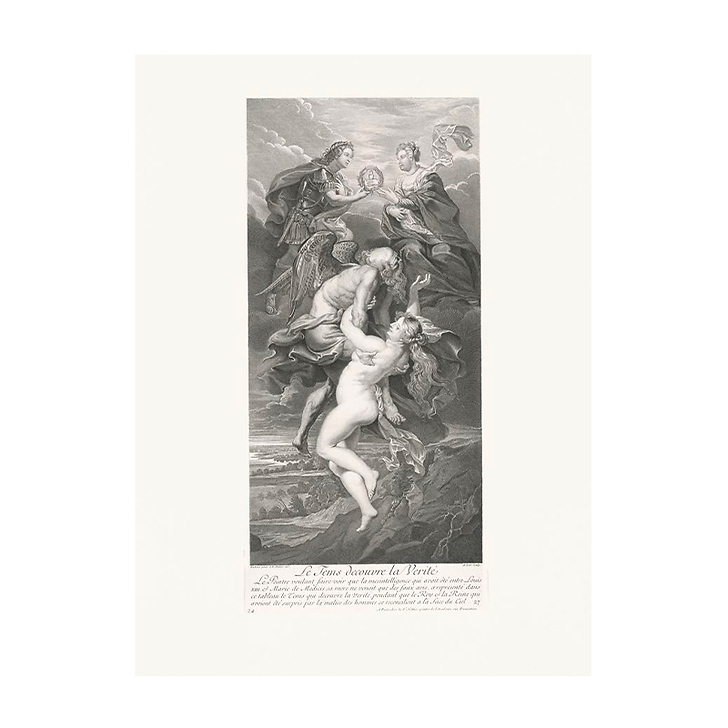
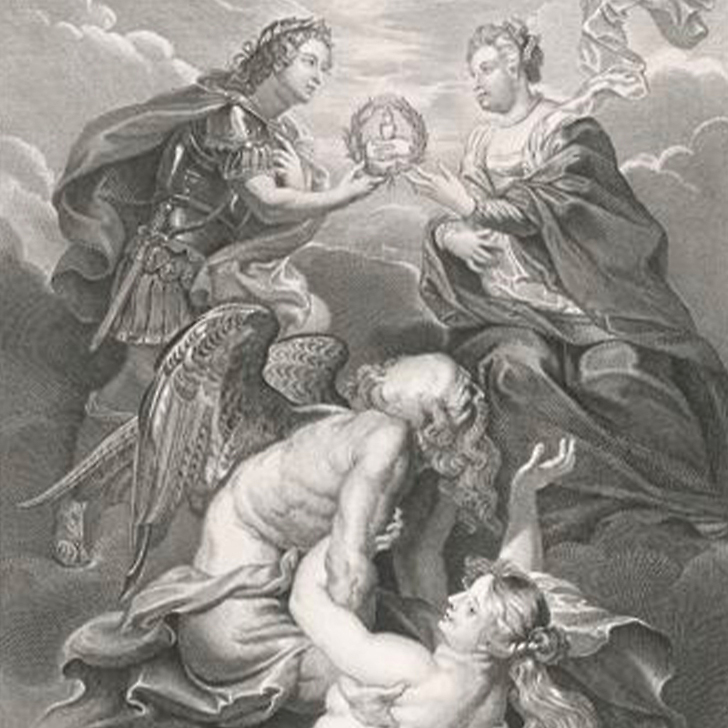
Queen of France, wife of Henry IV, and mother of King Louis XIII, Marie de' Medici commissioned a series of twenty-four paintings from Peter Paul Rubens in 1622 to decorate the western gallery of the Luxembourg Palace. The major episodes of the Queen's life are depicted here in a heroic and allegorical manner. The Triumph of Truth is the final painting in the series. At the center of the composition, Time, an elderly winged figure, uncovers and leads Truth. Above them in the heavens, Marie de' Medici and Louis XIII are depicted face to face, as equals.
The Triumph of Truth celebrates the understanding and reconciliation between the Queen and her son, as evidenced by the painting's second title, The Perfect and Sincere Union of the Queen Mother and Her Son, as well as the text inscribed at the bottom of the print: "The painter, wishing to show that the misunderstanding that had existed between Louis XII and his mother, Marie de' Medici, stemmed solely from false counsel, has depicted in this painting Time revealing the Truth, while the King and the Queen, who had been deceived by the malice of men, are reconciled before Heaven.
Close
Sold by GrandPalaisRmn
International delivery
14 days to change your mind
Secure payment: CB, Visa, Mastercard, Amex, Paypal