
New

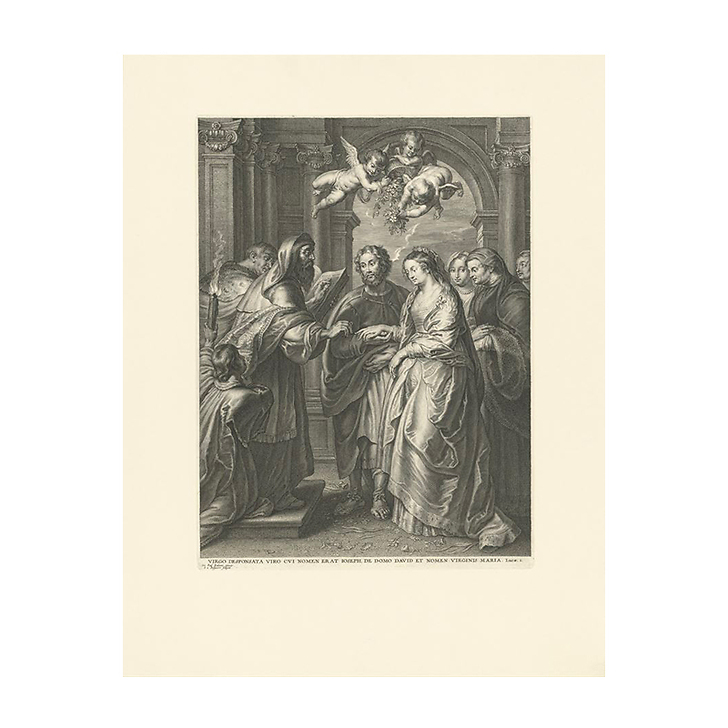
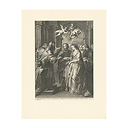
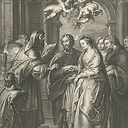
Engraving The Marriage of the Virgin

KM000836

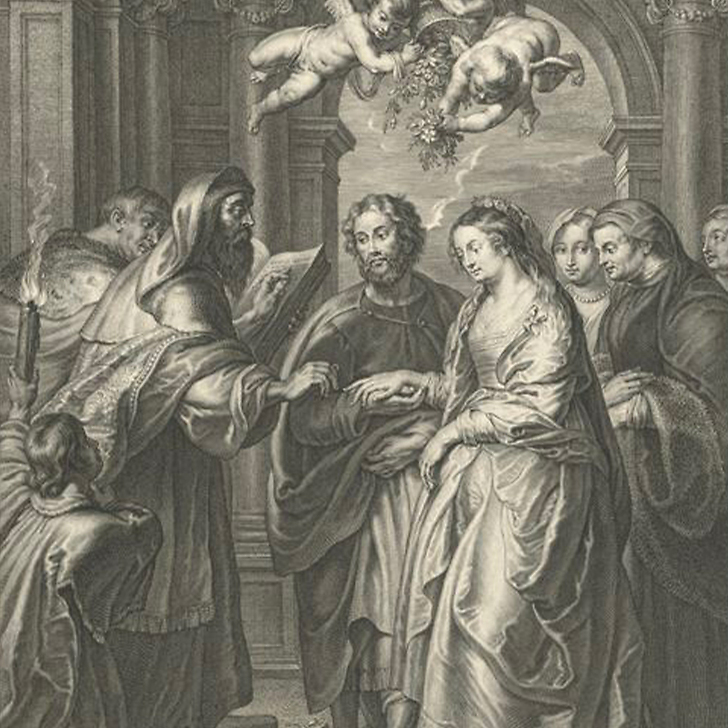
A classic theme in Christian iconography, the marriage of Mary and Joseph is a significant episode in the Virgin's life. The ring, a symbol of this union, is at the center of the composition and is about to be slipped onto the bride-to-be's finger. Three putti hover above the scene, pouring a basket...

-{{ Math.floor(lowestprice.prices.user.percent) }}%
-{{ Math.floor(selectedVariant.prices.user.percent) }}%
From Current price{{ lowestprice.prices.user.price_tax_display }} Old price{{ lowestprice.prices.user.price_strike_tax_display }} Current price{{ lowestprice.prices.user.label }}
{{ price.price_tax_display }} {{ price.label }}
Public price Current price{{ lowestprice.prices.suggested.price_tax_display }} Old price{{ lowestprice.prices.suggested.price_strike_tax_display }}
excl. taxes
Current price{{ selectedVariant.prices.user.price_tax_display }} Old price{{ selectedVariant.prices.user.price_strike_tax_display }} Current price{{ selectedVariant.prices.user.label }}
{{ price.price_tax_display }} {{ price.label }}
Public price Current price{{ selectedVariant.prices.suggested.price_tax_display }} Old price{{ selectedVariant.prices.suggested.price_strike_tax_display }}
excl. taxes
Last available items
Sold by GrandPalaisRmn

Characteristics

Maintenance
Eviter toute source d'humidité et de lumière directe. Ne pas plier la feuille
Material of the original work
cuivre
Artist
Petrus Paulus Rubens (1577-1640)
Printing Technique
Burin
Museum
Musée du Louvre
Reference
KM000836
EAN
3336727320914
Matière de l'article
Hahnemühle paper
Editor
GrandPalaisRmnAteliers
Original work kept at
Paris, musée du Louvre

The work and its artist

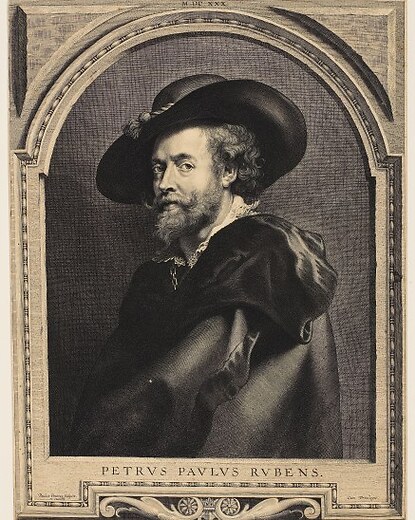
Petrus Paulus Rubens (1577-1640)

Peter Paul Rubens (1577-1640) was born in Westphalia to settle in Cologne where his family of Antwerp origin fled religious persecutions. He was taught painting from the age of 13 years. In 1598, he joined the country at the forefront of the fine arts: Italy. Conquered by the splendors of the Renaissance, he reconciles his various sources of inspiration in a style that represents the apogee of European Baroque. Until 1608, he will be in the service of the Duke de Mantoue while immersing himself among the great before eventually returning to Antwerp. He makes beautiful paintings such as "The Adoration of the Magi". But the most famous representative of the Flemish Baroque continues to travel across Europe for diplomacy missions, always producing masterpieces such as the "Judgment of Paris" or the "Three Graces".